


Senior Cat Limping? Causes, Arthritis Signs and What Actually Helps
3 October 2026 · Educational only; not a substitute for veterinary advice. Pawever makes Pawever Plus for Cats, which is mentioned below. If your cat is limping, please have her checked by your vet.
Short answer: a senior cat who starts limping needs a vet check first, because the cause could be an injury, an abscess from a cat fight, a nail or paw problem, or, in older cats, arthritis. If your vet finds age-related joint changes, the things that help most are vet-prescribed pain relief where needed, a healthy weight, small changes around the home, and a daily joint supplement made for cats.
See a vet today, or an emergency vet now, if your cat:
- suddenly can't use one or both back legs, cries out in pain, or has cold back paws (this can be a blood clot, often called saddle thrombus, which is an emergency)
- won't put any weight on the leg
- has a swollen, hot or wet area on the leg or paw, or a wound
- is breathing fast, hiding, or has stopped eating
- is still limping after 24 to 48 hours of rest
In this guide
- Why is my senior cat limping?
- My cat is limping on a back leg or front leg. What does it mean?
- Could my cat's limp be arthritis?
- What will my vet do? Cat arthritis treatment options
- What can I do at home to help my limping cat?
- Do joint supplements help cats with arthritis?
- How do cat joint supplements in Australia compare?
- Where does Pawever Plus for Cats fit in?
- Frequently asked questions
Why is my senior cat limping?
Older cats limp for the same reasons younger cats do, plus a few that become more common with age. A sudden limp usually points to an injury or infection. A limp or stiffness that builds slowly over weeks is more typical of arthritis.
| Possible cause | What you might notice | What to do |
|---|---|---|
| Bite wound or abscess | Sudden limp, a hot or swollen spot, fever, a cat that has been outdoors or in a fight | Vet visit; abscesses often need draining and antibiotics |
| Sprain, strain or fall | Sudden limp after jumping or a fall; may still bear some weight | Rest indoors; vet if no clear improvement in 24 to 48 hours |
| Overgrown or ingrown nail, paw pad injury | Licking one paw, a nail curling into the pad (common in older, less active cats) | Check the paws gently; your vet can trim and treat |
| Arthritis (degenerative joint disease) | Gradual stiffness, jumping less, stiff after sleeping; a limp may come and go | Vet check to confirm, then a long-term plan (see below) |
| Ligament or bone injury | Won't bear weight, swelling, a leg held at an odd angle | Vet the same day |
| Nerve weakness from diabetes | Walking flat on the back heels (hocks), plus drinking and urinating more | Vet visit with blood and urine tests |
| Blood clot (saddle thrombus) | Sudden weakness or paralysis of the back legs, crying out, cold back paws | Emergency vet immediately |
My cat is limping on a back leg or front leg. What does it mean?
Cat limping on a back leg: back legs take the load when a cat jumps up, so arthritis in the hips, knees and spine often shows up as hesitating before jumping or a stiff back-end walk. A sudden problem with both back legs, especially with crying or cold paws, is an emergency (see the red box above).
Cat limping on a front leg: front legs absorb the landing when a cat jumps down, so sprains and paw injuries are common here. Elbows are also among the joints most often affected by age-related changes in cats. Check the paw and nails first, then see your vet if the limp doesn't settle.
Which leg it is gives your vet a clue, but it can't tell you the cause on its own. A physical exam, and often X-rays, are what confirm it.
Could my cat's limp be arthritis?

Possibly, and it's far more common than most owners realise. In one radiographic study of 101 cats, 74% showed changes in their limb joints, most of them in older cats (Kimura et al., 2020). But cats rarely limp from arthritis alone. They hide discomfort and simply do less, so the usual signs of cat arthritis are quieter:
- jumping less, or jumping in stages (chair first, then the bench)
- hesitating before jumping down
- stiffness after sleeping that eases as she moves
- grooming less, especially along the back and hips
- toileting just outside the litter tray
- being grumpy when picked up or stroked over the hips
If you've noticed a limp and two or three of these, arthritis is worth raising with your vet. Our senior cat care guide covers these signs in more detail.
What will my vet do? Cat arthritis treatment options
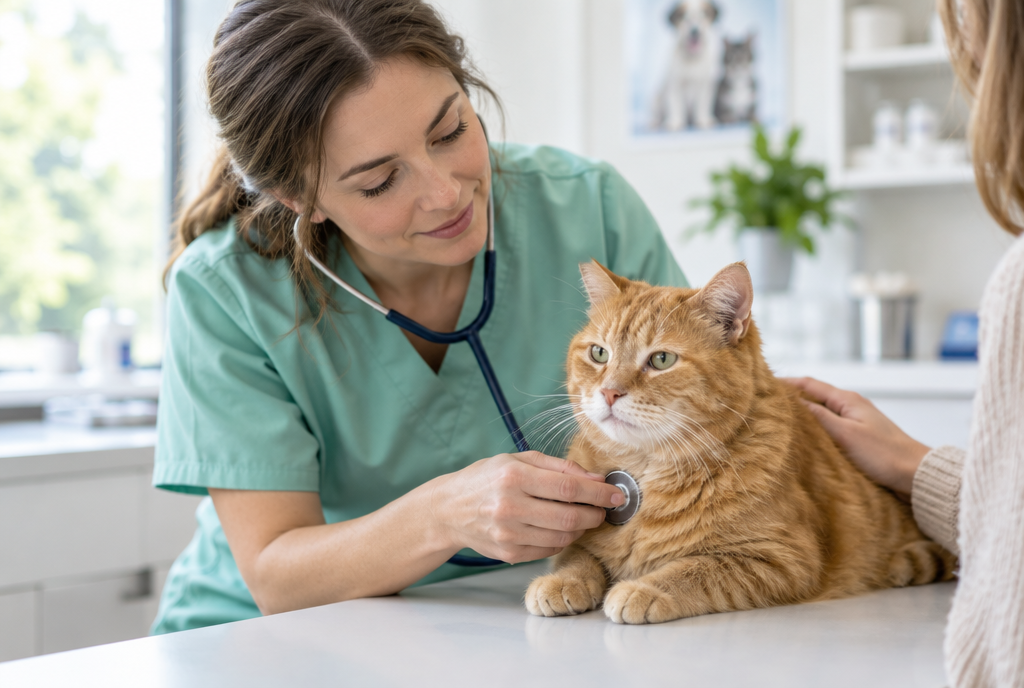
Your vet will examine the leg, feel the joints for pain, swelling and reduced movement, and may take X-rays. If arthritis is the cause, treatment is about long-term comfort and mobility. It can't reverse joint changes, but it can make a real difference to how a cat moves and feels. Options your vet may discuss include:
- Pain relief made for cats, such as an anti-inflammatory licensed for cats, with blood tests to check kidney health.
- A monthly injection for arthritis pain (an anti-NGF antibody), which some vets now offer as an alternative to daily medication.
- A weight plan, because extra weight puts more load on every joint.
- Rehabilitation or physiotherapy for some cats.
- A joint supplement alongside the plan, to support joint health over the long term.
What can I do at home to help my limping cat?
For a cat with arthritis, these changes cost very little and make a noticeable difference:
- pet steps or a ramp up to favourite spots (sofa, bed, window sill)
- a litter tray with one low side
- food, water and litter on the floor where she sleeps, so she doesn't need stairs
- a warm, padded bed away from draughts (many cats are stiffer in winter)
- rugs or mats on slippery floors
- short, gentle play every day to keep muscles working
- regular nail trims, since older cats wear their nails down less

For a sudden limp from a minor sprain, keep her indoors and rested for a day or two, and see your vet if it isn't clearly improving.
Do joint supplements help cats with arthritis?
Some ingredients have better evidence than others, and it's worth being clear about which.
PEA (palmitoylethanolamide) has the most relevant new evidence for cats. In a 2026 double-blind, placebo-controlled trial run by The University of Queensland, 50 cats with joint pain were given either 150 mg of PEA or a placebo every day for six weeks (Briskey et al., 2026, Frontiers in Veterinary Science). Compared with placebo, cats given PEA:
- showed significantly better ability to jump up and jump down by week 6 (owner jump-up scores improved by about 61%, against about 38% with placebo)
- had significantly lower owner-reported pain scores for the day at weeks 2 and 6
- tolerated it well
The overall pain index score improved in both groups and didn't differ significantly, so the benefit showed up in specific movements, especially jumping. That matches what owners of older cats tend to notice most. It is described as the first trial of PEA for joint pain in cats.

Green lipped mussel provides omega-3s and glycosaminoglycans and is widely used for joint support in pets. Undenatured type II collagen (UC-II) works at small daily doses to support cartilage. Glucosamine and chondroitin are the longest-used joint ingredients, but evidence in cats is mixed: a controlled trial of a glucosamine and chondroitin supplement in cats with joint pain found improvements in both the supplement and placebo groups, with no significant difference between them (Cunningham et al., 2022).
A supplement supports joint health; it doesn't replace a vet diagnosis or prescribed pain relief. Give any supplement daily for 6 to 8 weeks before judging it.
How do cat joint supplements in Australia compare?
These are the cat joint supplements most often recommended in Australia, the UK and the US. Figures are the daily maintenance dose for a cat of 4.5 kg (10 lb) or under, as listed on each brand's website in September 2026.
| Product | Main joint actives per day | PEA | Every dose disclosed | Format |
|---|---|---|---|---|
| Cosequin for Cats | Glucosamine HCl 125 mg and chondroitin 100 mg every other day; manganese | No | Yes | Sprinkle capsule |
| Dasuquin for Cats | As Cosequin, plus ASU 25 mg, boswellia 11 mg and green tea extract 9 mg, every other day | No | Yes | Sprinkle capsule |
| Antinol for Cats | Green lipped mussel oil (PCSO-524) 50 mg, providing 20 mg omega-3 | No | Yes | Soft gel capsule |
| Pawever Plus for Cats | Green lipped mussel 200 mg, UC-II collagen 40 mg, hyaluronic acid 25 mg, manganese, plus 6 healthy-ageing actives | 150 mg daily (the dose used for cats in the University of Queensland trial) | Yes, all 11 actives | Sprinkle capsule |
For a deeper look at each product, see our guide to the best joint supplements for cats.
Where does Pawever Plus for Cats fit in?

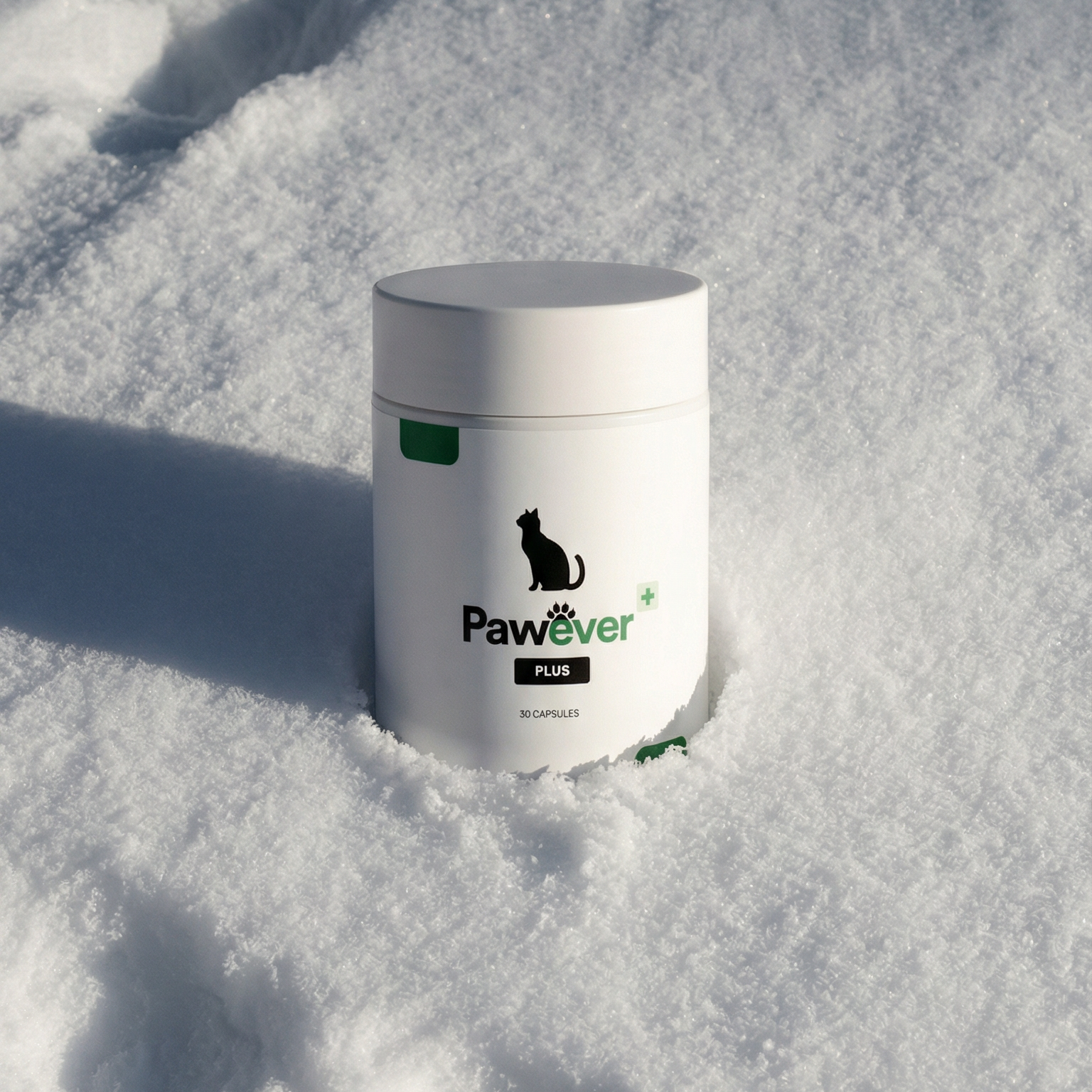
Pawever Plus for Cats is a once-daily sprinkle capsule made only for cats, designed to support joints and mobility in older cats alongside your vet's advice. What you can check for yourself:
- 150 mg of PEA per capsule, the daily amount given to cats in the University of Queensland trial
- 200 mg of New Zealand green lipped mussel and 40 mg of undenatured type II collagen
- 11 actives, every dose printed on the label, with no proprietary blends
- A cat-only formula, not a dog formula at a smaller dose
- Every batch independently tested at an accredited laboratory in the United States
- An Australian brand, shipping from Perth
- A 60-day money-back guarantee
It also includes taurine, L-carnitine, NMN, CoQ10, vitamin E and vitamin B12 for older cats' energy and longevity, so it covers more than joints in one capsule. Open the capsule and sprinkle it over food once a day. Many owners report changes in mobility within about 4 weeks.

What it is not: a medicine. It doesn't replace your vet's diagnosis, pain relief or treatment. If your cat has a diagnosed condition or takes medication, check with your vet before starting.
150 mg PEA · Every dose disclosed · Independently batch-tested · 60-day money-back guarantee
Frequently asked questions
Why is my old cat limping but not acting like she's in pain?
Cats are very good at hiding pain, so a limp with no crying or obvious distress is common. It doesn't mean she's comfortable. A vet check is still the right first step.
Should I wait and see if my cat's limp goes away?
If the limp is mild, she's still eating, and there's no swelling or wound, rest her indoors for 24 to 48 hours. If it isn't clearly better by then, or it keeps coming back, see your vet. Any of the emergency signs at the top of this page means see a vet straight away.
What is the best treatment for cat arthritis?
There isn't one single treatment. The best results usually come from combining vet-prescribed pain relief where needed, a healthy weight, home changes such as steps and a low-sided litter tray, and a daily joint supplement.
Can I give my cat ibuprofen or paracetamol for limping?
No. Both can be fatal to cats. Only give pain relief your vet has prescribed for your cat.
Can a joint supplement stop my cat limping?
A supplement can't treat an injury or cure arthritis. For cats with age-related joint changes, it can support joint health and mobility over time. In the University of Queensland trial, cats given 150 mg of PEA daily jumped up and down more easily after six weeks than cats given a placebo.
How long does a cat joint supplement take to work?
Many owners report changes within about 4 weeks, with fuller effects over 6 to 8 weeks of daily use. Keep a simple diary of jumping, play and grooming so you can judge the change objectively.
Is cat arthritis curable?
No, arthritis can't be reversed, but it can be managed well. Many cats with arthritis stay active and comfortable for years with the right care.
Sources
- Briskey D, Craddock E, Rao A, Mills PC (2026). Levagen+ (palmitoylethanolamide) alleviates joint pain and reduces the impact of joint pain in canines and felines: a double-blind, placebo-controlled, randomized clinical trial. Frontiers in Veterinary Science 13:1703143. (Funded by the ingredient's manufacturer.)
- Kimura et al. (2020). Retrospective radiographic study of degenerative joint disease in cats
- Cunningham R et al. (2022). Evaluation of a nutritional supplement for the alleviation of pain associated with feline degenerative joint disease. Journal of Feline Medicine and Surgery
- Court and Greenblatt (2000). UGT1A6 is a pseudogene in cats
This product is not intended to diagnose, treat, cure, or prevent any disease.










Leave a comment
This site is protected by hCaptcha and the hCaptcha Privacy Policy and Terms of Service apply.