


Fish Oil for Cats: Benefits, Dosage, Safety and How to Choose the Best Omega-3
27 September 2026 · Educational only; not a substitute for veterinary advice. If your cat has a medical condition or takes medication, speak to your vet before starting any supplement.
Fish oil is one of the most commonly used supplements for cats, and one of the most misunderstood. The label says "omega 3", but what matters is how much EPA and DHA your cat actually gets, how fresh the oil is, and whether it's protected by enough vitamin E.
At a glance
- Cats need EPA and DHA ready-made. Their bodies make almost none from plant oils such as flaxseed.
- A commonly cited supplemental range is 30 to 50 mg of combined EPA + DHA per kg of body weight per day.
- No safe upper limit has been published for cats, so more is not better.
- The best omega-3 for cats lists EPA + DHA in mg, contains vitamin E, and can show an oxidation (TOTOX) result.
In this guide
- What is fish oil for cats?
- Why can't cats rely on plant omega-3s?
- What are the benefits of fish oil for cats?
- How much fish oil should a cat have?
- Is fish oil safe for cats? Side effects to know
- Why does vitamin E matter in fish oil for cats?
- Salmon oil vs anchovy oil for cats: which is better?
- What is the best omega-3 fish oil for cats?
- How does Pawever Omega Oil measure up?
- Frequently asked questions
What is fish oil for cats?

Fish oil is refined fat from oily fish, valued for two long-chain omega-3s: EPA (eicosapentaenoic acid) and DHA (docosahexaenoic acid). DHA is a structural fat in the brain and retina. EPA is involved in the body's normal inflammatory signalling. "Omega 3 for cats", "fish oil for cats" and "salmon oil for cats" all describe the same category; what separates products is the fish, the EPA + DHA concentration, and quality control.
Why can't cats rely on plant omega-3s?
Cats have very low activity of the enzyme delta-6 desaturase, so their conversion of plant omega-3 (ALA) into EPA is "virtually zero" (Today's Veterinary Practice). For a cat, useful omega-3s come ready-made from marine sources.
What are the benefits of fish oil for cats?

- Skin and coat: the most commonly reported change is a softer, glossier coat and less dry, flaky skin, usually after 3 to 4 weeks of daily use.
- Joint comfort and mobility: EPA supports the body's normal inflammatory balance, which matters for older, less active cats. See our senior cat care guide.
- Brain and eye health: DHA is a building block of brain and retinal tissue.
Fish oil is a nutritional supplement, not a medicine. If your cat has a diagnosed condition, your vet may recommend a specific dose and monitoring.
How much fish oil should a cat have?
Dose by EPA + DHA, not by "fish oil" or "total omega-3". A typical 1,000 mg fish oil capsule holds only about 300 mg of EPA + DHA.
A commonly cited supplemental range for cats is 30 to 50 mg of combined EPA + DHA per kg of body weight per day (Today's Veterinary Practice).
| Cat weight | Daily EPA + DHA (30 to 50 mg/kg) |
|---|---|
| 3 kg (6.6 lb) | 90 to 150 mg |
| 4 kg (8.8 lb) | 120 to 200 mg |
| 5 kg (11 lb) | 150 to 250 mg |
| 6 kg (13.2 lb) | 180 to 300 mg |
| 7 kg (15.4 lb) | 210 to 350 mg |
Three practical rules:
- Check the food first. Some diets already contain meaningful EPA + DHA, especially those for skin, joints or kidneys.
- Start slowly. Introduce the oil over the first week to avoid a loose stool.
- More is not better. No safe upper limit has been published for cats, so stay within your vet's advice.
Is fish oil safe for cats? Side effects to know
At sensible doses fish oil is well tolerated by most cats. Reported side effects include vomiting or loose stools (usually from starting too fast), fishy breath, reduced platelet function and slower wound healing at high intakes, and interactions with medicines that affect clotting, such as aspirin (Today's Veterinary Practice). Tell your vet your cat takes fish oil before any surgery.
Why does vitamin E matter in fish oil for cats?
Omega-3 fats oxidise easily. A cat taking in a lot of unsaturated fat without enough vitamin E to protect it can develop steatitis ("yellow fat disease"), a painful inflammation of body fat historically linked to fish-heavy, vitamin E-poor diets. The rule is simple: only use a fish oil for cats that contains added vitamin E (often listed as "mixed tocopherols").
Salmon oil vs anchovy oil for cats: which is better?
| Factor | Salmon oil | Anchovy (small-fish) oil |
|---|---|---|
| Position in the food chain | Higher (larger, longer-lived fish) | Low (small, short-lived fish) |
| Contaminant exposure | More potential to accumulate | Less potential to accumulate |
| EPA + DHA consistency | Varies, especially with farmed salmon | Naturally high and more consistent |
| Common source | Often a by-product of human salmon processing | A dedicated fishery for oil |

Whatever the fish, what the label and test results show matters most. More detail: salmon oil vs small-fish oil.
What is the best omega-3 fish oil for cats?
The best omega-3 for your cat passes all five of these checks:
- EPA + DHA listed in mg per serving. "1,000 mg fish oil" tells you almost nothing.
- Vitamin E included (mixed tocopherols).
- Oxidation tested. Ask for the TOTOX value. The industry benchmark (GOED) is below 26 (PMC review); lower is fresher.
- Independently tested for contaminants such as heavy metals.
- Easy to dose. Most cats won't take a capsule; a measured liquid on food is far easier.
How does Pawever Omega Oil measure up?

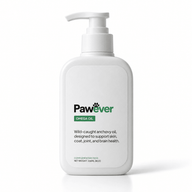
Pawever Omega Oil is wild-caught anchovy oil protected with mixed tocopherols (vitamin E) and astaxanthin. Our Omega Oil has:
- at least 460 mg of EPA + DHA per 2.5 mL pump
- a TOTOX of 3.77, well inside the GOED limit of 26
- a clean contaminant panel
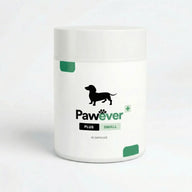
It comes in a pump bottle, so every serving is measured and goes straight onto food with no pilling. It pairs with Pawever Plus for Cats, our daily joint and healthy-ageing capsule, which no longer contains fish oil so the two work together. Read the Omega Oil introduction.
60-day money-back guarantee.
Frequently asked questions
Can I give my cat human fish oil?
It's possible but not ideal. Human capsules are hard to give to a cat, may contain flavourings or added vitamins, and aren't dosed for a 4 kg animal. Some also lack enough vitamin E.
How long does fish oil take to work in cats?
Omega-3s build up over weeks. Owners typically notice coat changes after 3 to 4 weeks; mobility-related changes, if any, usually take 4 to 8 weeks.
Is salmon oil or fish oil better for cats?
Neither label is automatically better. Compare EPA + DHA per serving, vitamin E content and oxidation results. Small fish such as anchovies tend to accumulate fewer contaminants than salmon.
Can fish oil upset my cat's stomach?
It can if you start at the full dose. Introduce it over a week, and stop and speak to your vet if vomiting or diarrhoea continues.
Can I give fish oil to my cat with other supplements?
Usually yes, but add up EPA + DHA from all sources, including food. If your cat takes medication, check with your vet.
Sources
- Today's Veterinary Practice: role of dietary fatty acids in dogs and cats
- Fish oil supplements, oxidative status, and compliance behaviour (PMC)
- dvm360: Lenox and Bauer (2013), potential adverse effects of omega-3 fatty acids
This product is not intended to diagnose, treat, cure, or prevent any disease.


Leave a comment
This site is protected by hCaptcha and the hCaptcha Privacy Policy and Terms of Service apply.